


The business translation gap is the quiet space between what leadership decides and what delivery teams actually build. It rarely shows up on a risk register. Nobody schedules a meeting to discuss it. Yet it’s where a surprising number of good ideas go to die.
If you’ve ever sat through a polished strategy launch and then watched the project that followed drift into something nobody quite recognises, you’ve seen it happen. The vision was sound. The people were capable. Somewhere between the boardroom and the backlog, the meaning got lost.
This guide explains what the gap is, why it opens up, the warning signs to watch for, and how a skilled business analyst closes it. Whether you work in Melbourne, Sydney, Brisbane or anywhere else in Australia, the patterns will probably feel familiar.
What Is the Business Translation Gap?
The business translation gap is the loss of meaning that happens when strategy is handed from one group to another. Executives speak in outcomes: grow market share, reduce churn, improve customer experience. Product owners speak in features. Developers speak in tickets and technical constraints. Operations teams speak in process and risk. Each group is fluent in its own language, and nobody is paid to translate between them.
Think of it as a game of telephone played across six departments and four months. By the time the original intent reaches the people doing the work, it has been summarised, reinterpreted and quietly diluted. A business translation gap isn’t a people problem. It’s a structural one.
You may also hear it called the strategy-execution gap, the requirements gap or the alignment problem. The labels change, but the symptom is always the same: what gets delivered isn’t quite what the business needed.
Why the Business Translation Gap Kills Good Ideas
Good ideas rarely fail because they were bad ideas. They fail because the journey from decision to delivery has four predictable weak points.
Strategy is written for approval, not for delivery
Most strategy documents are built to win sign-off. They’re ambitious, tidy and deliberately high level, which is perfect for a board paper and useless for a team that needs to know what to build on Monday morning.
Nobody owns the space in between
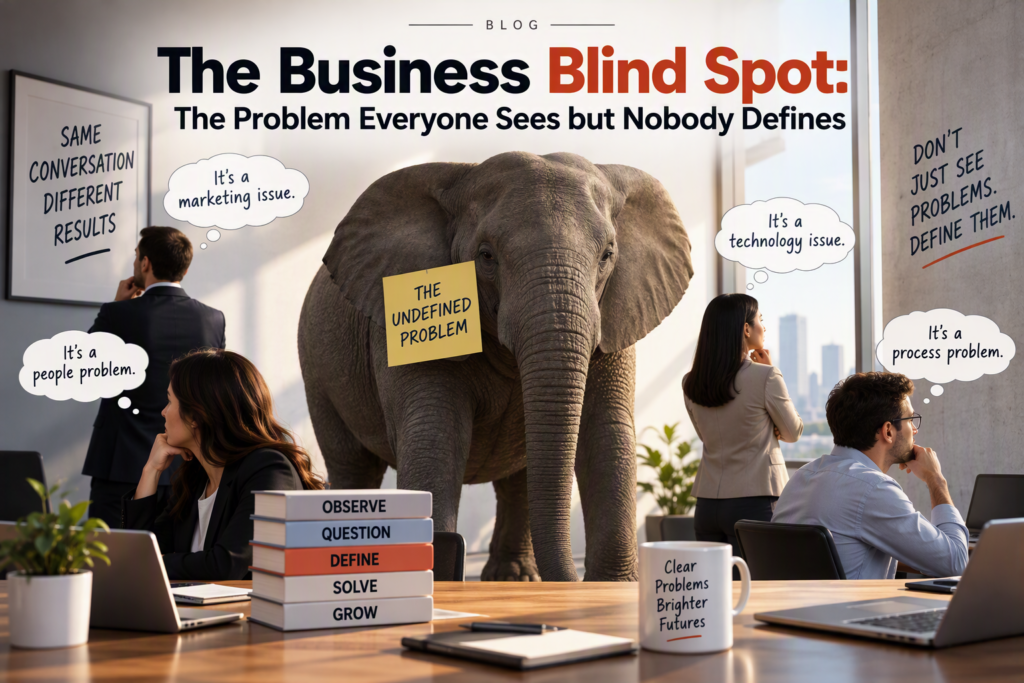
Executives assume the project team will work out the details. Project teams assume the executives have already thought it through. The gap persists because it sits inside the handover, and handovers belong to everyone and no one.
Assumptions stay invisible
Every idea rests on assumptions about customers, systems, budgets and timing. When those assumptions are never written down, they can’t be tested. They resurface months later as “unexpected” scope changes and budget overruns.
Stakeholders hear different things
Two people can leave the same meeting with opposite understandings of what was agreed. Without a shared, plain-language record, the business translation gap widens with every conversation that follows.
7 Warning Signs of a Business Translation Gap

You don’t need a formal audit to spot a gap. These are the signals most teams notice first:
- Requirements keep changing late in the project. If the basics are still being debated at the halfway mark, they were never properly understood at the start.
- Teams can’t link their work to a business goal. Ask anyone on the project why a feature matters. A blank look is your answer.
- Demos end with “that’s not quite what we meant.” Polite disappointment is one of the clearest symptoms there is.
- Everyone is busy, but the numbers don’t move. Delivery is on time and on budget, yet the metric the project was meant to improve stays flat.
- The same clarifying questions keep coming back. If a meeting repeats last fortnight’s discussion, the answer was never captured.
- Workarounds appear straight after go-live. Users build spreadsheets around the new system because it doesn’t match how they really work.
- Leaders describe the strategy differently. Ask three executives for the one-sentence version. If you get three answers, the team below them has no chance.
A Realistic Example of the Business Translation Gap
Here’s an illustrative scenario, not a real client. A national retail group in Sydney decides to “improve the omnichannel customer experience.” The executive team means something specific: customers should see accurate, near real-time stock levels online and be able to collect in store.
The digital team hears “customer experience” and delivers a beautifully redesigned mobile app. Store operations wasn’t in the room, and stock data still updates overnight. On launch day the app confidently shows products that aren’t on the shelf. Customers are annoyed. Staff are blamed. Nobody did bad work.
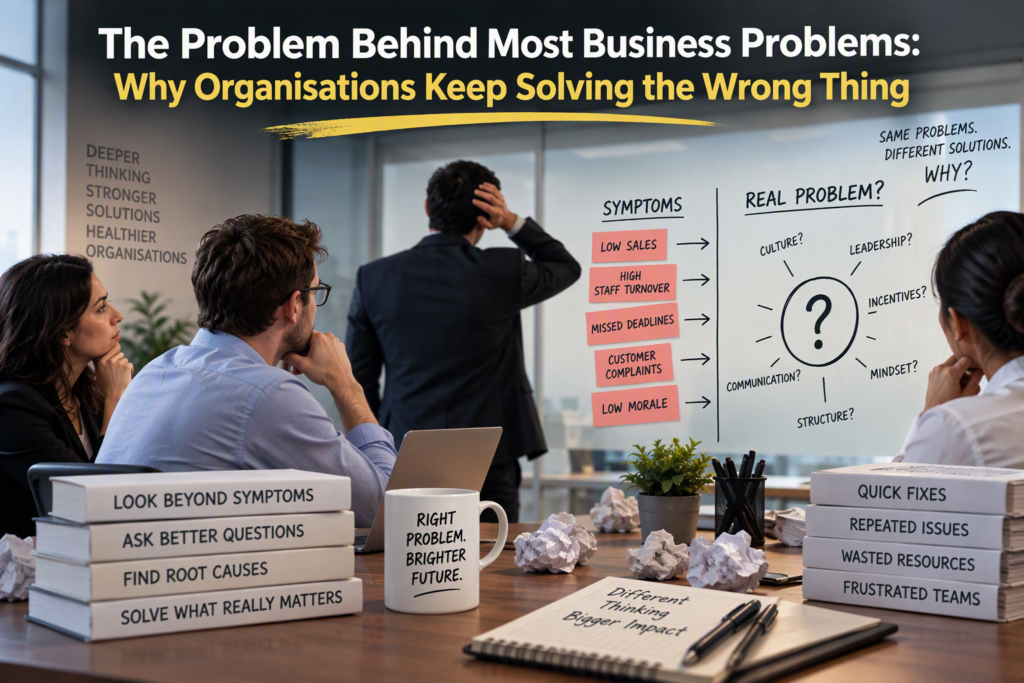
What went wrong was translation. The real requirement, reliable stock visibility, was buried under a phrase that meant something different to every team. A business analyst would have asked in week one: what decision should a customer be able to make, and what data do we need to support it? That single question closes a business translation gap before it costs anything.
How a Business Analyst Closes the Business Translation Gap
A business analyst is, in plain terms, the person who translates. They sit between the people who set direction and the people who build solutions, and they make sure the meaning survives the trip. In practice, that looks like this:
- Clarify the problem before the solution. They ask what outcome is really needed, so the team doesn’t build a clever answer to the wrong question.
- Map stakeholders and their language. They work out who is affected, who decides and who needs to be consulted, then adapt their communication to each group.
- Elicit and document requirements. Through interviews, workshops and observation, they turn vague wishes into clear, testable statements.
- Model processes and data. Visual models expose the handoffs and gaps that paragraphs of text hide.
- Define acceptance criteria. If nobody can describe what “done” looks like, the work isn’t ready to start.
- Trace every requirement to a business goal. Anything that can’t be linked to an outcome is a candidate for removal.
The profession has a well-established body of practice for this. The International Institute of Business Analysis (IIBA) publishes the BABOK Guide, a widely referenced framework for business analysis. If you’d like to build these techniques hands-on, the Business Analysis Techniques course covers practical methods for analysing and improving business processes.
A 5-Step Framework to Bridge the Business Translation Gap
You don’t have to be a full-time analyst to narrow the gap. This five-step routine works on projects of almost any size.
- Restate the strategy as a problem statement. Replace “improve customer experience” with something concrete, such as “customers abandon click-and-collect orders because stock information is wrong.”
- Map the people and their language. List every group touched by the change and write down how each one describes the goal. The differences show you where meaning will leak.
- Make assumptions explicit. Keep a visible log of what you’re taking for granted, assign an owner to each item, and test the riskiest ones first.
- Turn outcomes into testable requirements. Each requirement should be specific enough that two people would agree on whether it has been met.
- Trace and re-check. Link requirements back to the original objective, and review that link at every major milestone, not just at the start.
Short feedback loops make this routine stick. The Agile Alliance has useful material on iterative delivery, and the Project Management Institute publishes research on aligning projects with strategy. Both reinforce the same lesson: alignment is something you keep checking, not something you achieve once.
Skills That Help Close the Business Translation Gap
Closing the gap is a skill set, not a personality trait. The good news is that every item below can be learned and practised.
- Active listening and facilitation to draw out what stakeholders mean, not just what they say.
- Requirements writing that is clear, concise and testable.
- Process modelling to visualise how work really flows.
- Data literacy to challenge opinions with evidence.
- Agile ways of working to test understanding early and adjust often. The Agile Business Analyst (AgileBA) Foundation course is built around this.
- Stakeholder management to keep sponsors, users and delivery teams moving in the same direction.
Business Analyst Training to Close the Business Translation Gap in Australia
Reading about the gap helps. Practising the techniques that close it helps far more. Business Analyst Courses runs practical training with a focus on real-world scenarios, so you leave with skills you can use on Monday. Whether you’re starting a career or sharpening an existing one, these programs are a sensible place to begin:
- Fast Start in Business Analysis for a practical introduction to the role.
- Business Analysis Practice Practitioner for applying techniques in real projects.
- BCS Business Analysis Foundation for a recognised certification pathway. You can read more about the awarding body at BCS, The Chartered Institute for IT.
- Agile Business Analyst (AgileBA) Foundation for analysts working in agile teams.
You can browse every option on the full courses page, or choose the city that suits you best:
- Business analyst course in Melbourne
- Business analyst course in Sydney
- Business analyst courses in Brisbane
- Business analyst course in Adelaide
- Business analyst course in Perth
- Business analyst courses in Canberra
Prefer to learn from home or with your team? Live virtual and in-house options are available too. See the all locations page for details.
Frequently Asked Questions About the Business Translation Gap
What is the business translation gap?
It’s the breakdown in meaning that occurs when strategic goals are passed to the teams who must deliver them. Strategy is expressed in outcomes, delivery is expressed in tasks, and without someone translating between the two, important intent gets lost.
Why do good ideas fail between strategy and execution?
Usually because of unclear ownership, hidden assumptions and inconsistent understanding among stakeholders, not because the idea itself was weak.
How does a business analyst help?
A business analyst clarifies the real problem, captures requirements in plain language, models how work flows and links every deliverable back to a business objective.
Do I need a course to become a business analyst?
A course isn’t mandatory, but structured training speeds things up. It gives you a proven toolkit, a recognised certification pathway and practice with realistic scenarios before you face them on the job.
Can a smaller business have a business translation gap?
Absolutely. Small teams often assume everyone shares the same picture because they talk daily. That assumption is exactly how the gap forms, and it’s usually cheaper to fix early.
Final Thoughts: Close the Gap Before It Costs You
Every organisation has ideas worth pursuing. The ones that succeed aren’t always the smartest. They’re the ones where someone made sure the intent survived the journey. Closing the business translation gap is one of the most valuable skills in modern project work, and it’s one you can start building today.
Ready to build it? Explore our business analyst courses, read more on the Business Analyst Courses blog, or call 1300 649 299 to speak with the team. You can also send an enquiry online.