


The decision ownership gap is what happens when a project needs a decision and everyone assumes somebody else will make it. The meeting ends with “let’s circle back”, the action item has no name next to it, and two weeks later the team is still waiting. Nothing is technically broken. Nobody is slacking. The project has simply stopped, because the decision has no owner.
If your projects keep stalling on questions that sound small, the decision ownership gap is usually the cause. This guide explains how to recognise it, why it happens even on well-run teams, how DACI and RACI differ, and how business analysts close the gap before it costs weeks.
What Is the Decision Ownership Gap?
The decision ownership gap is the space between a decision being needed and one named person being accountable for making it. It’s different from a slow decision. A slow decision has an owner who hasn’t acted yet. In a decision ownership gap, there’s no owner to chase in the first place.
That distinction matters because the usual fixes don’t work. Sending reminders, adding meetings or escalating the delay all assume someone is holding the decision. When nobody is, you’re chasing a shadow, and every follow-up lands on a different person who politely points to someone else.
Most teams already have a project sponsor, a steering committee and a delivery lead. The decision ownership gap still appears because titles describe authority in general, not who decides this particular question, today.
Warning Signs of a Decision Ownership Gap
You can usually spot the gap long before the project is visibly late. Watch for these patterns:
- The same topic appears on three consecutive agendas without a conclusion.
- Action items say “team” or “stakeholders” instead of a person’s name.
- People say “I thought that was already decided”, and nobody can show where.
- Work starts on an option, then gets reversed once someone senior reacts to it.
- Everything escalates to the sponsor because no lower level feels safe deciding.
- Approvals need five signatures, and each signer assumes another one did the real review.
Any two of these together are a strong sign that the decision ownership gap has opened on your project.
Why Nobody Owns the Decision (Even on Well-Run Teams)
Teams rarely create the decision ownership gap deliberately. It emerges from perfectly sensible habits that quietly diffuse responsibility.
1. Consensus gets mistaken for ownership
Collaborative cultures like to decide together. That’s healthy for input, but when everyone shares the decision, nobody is accountable for it. Consensus is a way of gathering views, not a substitute for a decider.
2. Decision rights were never defined
Many organisations document who does the work but not who makes which calls. When a new question appears, nobody can say whether it belongs to the product owner, the sponsor, IT, finance or legal.
3. Fear of being blamed
If a decision might be wrong or unpopular, the safest personal move is to wait for someone else to make it. The decision ownership gap widens fastest in environments where mistakes are punished.
4. Authority is split across functions
Business, technology, risk and procurement each hold a piece of the answer. Without a single approver, each group can say yes to its part while the whole decision remains unmade.
5. Meetings create the feeling of progress
A well-attended discussion feels productive even if it ends without a decision. Over time, teams confuse talking about a problem with resolving it.
6. Nobody records decisions
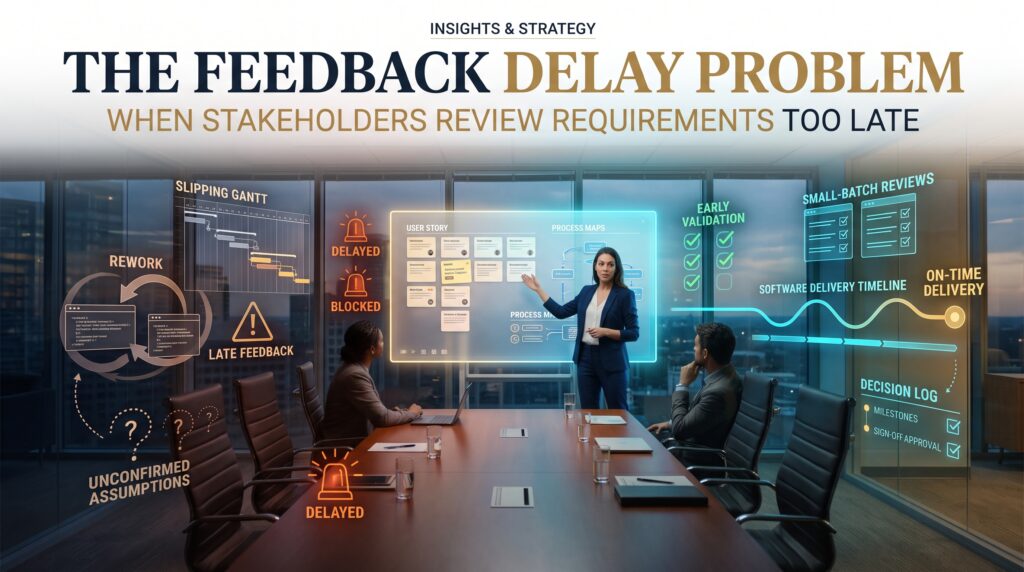
When decisions aren’t logged, it’s unclear which ones were made, by whom or why. That makes it easy for the next meeting to reopen them, and easy for new gaps to hide.
RACI, DACI and RAPID: Which Framework Closes the Gap?
Frameworks don’t make decisions, but they make ownership visible. Here’s how the three most common ones compare for project work.

| Framework | What it assigns | Best for | Watch out for |
| RACI | Responsible, Accountable, Consulted, Informed for tasks and deliverables | Clarifying who does what across a process | Multiple “Accountable” names, and no clear decision-maker |
| DACI | Driver, Approver, Contributors, Informed for one decision | Project and product decisions with a deadline | Letting the Driver and Approver blur into one role |
| RAPID | Recommend, Agree, Perform, Input, Decide | Complex decisions needing sign-off from several groups | Too many “Agree” holders slowing the call |
| Single-point approver | One named decider per decision type | Small teams and recurring decisions | Approver becomes a bottleneck if unavailable |
For most projects, DACI is the easiest way to close a decision ownership gap because it separates the person who runs the process from the one who makes the final call. Atlassian’s DACI decision-making play is a good free starting point, and it works just as well in a spreadsheet or on a whiteboard.
What the Decision Ownership Gap Costs a Project
The cost isn’t only the delay. When a decision sits unowned, everything downstream waits or guesses. Developers build on a likely answer, testers write scripts for it, and training material gets drafted. If the final decision goes the other way, all of that work is reworked.
Here’s a typical example. A team is implementing a new customer onboarding process and needs to decide how long to retain identity documents. Legal says it’s a business decision, the business says it’s a compliance decision, and IT builds to a default “for now”. Six weeks later, an auditor’s question forces the issue, and the system needs changes. The decision ownership gap cost the project a month, even though the question itself took ten minutes to answer once the right person had it.
There’s a human cost as well. Teams that wait on unowned decisions lose momentum, and good people grow frustrated by a project that never seems to settle.
How Business Analysts Close the Decision Ownership Gap
Business analysts sit between stakeholders, which makes them well placed to spot where ownership is missing. The BABOK Guide from IIBA places stakeholder analysis and communication at the heart of the discipline, and these practical techniques build on that foundation.
| Technique | How it closes the gap | Output |
| Decision log | Records every decision, its owner, date and rationale | A single source of truth |
| Decision register (open items) | Lists pending decisions with a named owner and needed-by date | Visible, time-boxed questions |
| DACI at kickoff | Assigns roles for the five or six biggest decisions upfront | Clear decision rights |
| Stakeholder analysis | Maps who truly holds authority, interest and influence | The real decider identified |
| “Decision needed by” dates | Ties each decision to the work it blocks | Cost of delay made obvious |
| Escalation path | Defines what happens if the owner doesn’t decide in time | No silent stalls |
Notice that none of these add bureaucracy. A one-page decision register reviewed weekly does more than another steering committee.
A 5-Step Decision Ownership Check for Your Project
- List the open decisions. Write down every question the team is waiting on or has discussed more than once.
- Name one owner for each. Not a team, a function or “leadership”. One person with the authority to decide.
- Set a needed-by date. Link it to the work it blocks, so everyone sees what the delay costs.
- Agree who contributes and who is informed. Keep contributors limited to people who add unique input.
- Log the outcome and the reason. Record it where the whole team can find it, and treat it as closed unless new facts appear.
Run this once at kickoff and again whenever a topic returns to the agenda a second time. That’s usually the earliest signal that ownership is missing.
The Decision Ownership Gap Across Australian Cities
The mix of organisations differs by city, but ownership problems follow similar patterns. These are typical situations rather than published statistics.
| City | Typical project environment | Common ownership problem |
| Sydney | Financial services and large enterprise programs | Decisions split between business, risk and technology |
| Melbourne | Mixed enterprise, health and education change projects | Consensus culture without a final approver |
| Brisbane | Government, infrastructure and resources projects | Approvals spread across multiple governance layers |
| Perth | Resources and engineering with remote teams | Site and head-office teams each assuming the other decides |
| Adelaide | Public sector and defence-related programs | Unclear authority across agencies and suppliers |
| Canberra | Federal government transformation work | Policy owners and delivery teams holding different decisions |
You can build the stakeholder and requirements skills behind this work with a business analyst course in Sydney, Melbourne, Brisbane, Perth, Adelaide or Canberra. See every option on our locations page, including live online classes.
Build the Skills to Close the Decision Ownership Gap
Knowing a framework is useful. Running a calm, effective decision conversation with senior stakeholders is a skill you build with practice. Our business analyst courses combine techniques, templates and real workplace scenarios so you can spot and resolve missing ownership on your next project.
Good starting points include Fast Start in Business Analysis, Business Analysis Techniques, the AgileBA Foundation course, Business Analysis Practice Practitioner and the BCS Business Analysis Foundation. You can also explore Logitrain’s wider business analysis training courses or read more guides on the Business Analyst Courses blog.
Decision Ownership Gap FAQs
What is the decision ownership gap?
The decision ownership gap is the situation where a decision is needed but no single person is clearly accountable for making it. Projects stall because there is nobody to chase, rather than someone who is simply slow.
Why do projects stall when nobody owns a decision?
Work depends on decisions. When one stays unmade, dependent tasks wait, or teams guess and later rework their output. Either way, delay and cost grow quietly.
What is the difference between DACI and RACI?
RACI assigns roles for tasks and deliverables, while DACI assigns roles for one specific decision, with a Driver to run the process and a single Approver to make the call. DACI is usually better at closing the gap.
Can a business analyst fix the decision ownership gap?
A business analyst can make it visible and manageable by keeping a decision log, mapping stakeholders, assigning DACI roles and setting needed-by dates. The final decision stays with the owner, but the analyst makes sure an owner exists.
Final Thoughts: Every Decision Needs a Name
Projects rarely stall because people can’t decide. They stall because nobody is sure whose decision it is. Closing the decision ownership gap means attaching a name, a date and a record to every important decision, early and visibly.
If you’d like to build these skills professionally, enquire about a business analyst course today, learn more about us, or call 1300 649 299 to speak with our team.