


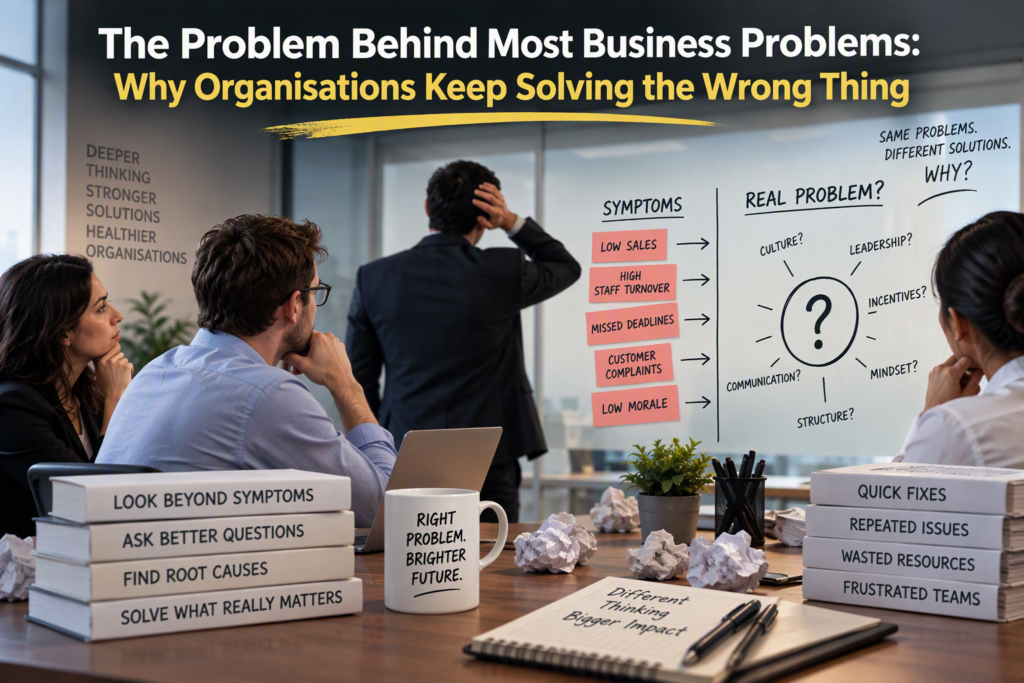

Execution roles are the jobs where you are trusted to deliver what someone else has already decided, and plenty of smart, capable professionals discover they have been living in one for years. You are the person who gets things done. Deadlines are met, reports go out on time, systems get configured, and your manager would genuinely struggle without you. Yet the promotions, the strategy conversations and the interesting projects keep landing on someone else’s desk.
If that sounds familiar, you are not underperforming. You are over-delivering in the wrong place. This guide explains why intelligent people end up stuck in execution roles, what the pattern quietly costs your career, and how business analysis skills help you move from carrying out the work to shaping it. If you are ready to act now, you can explore our business analyst courses or call 1300 649 299.
What Are Execution Roles, and Why Do They Feel So Safe?
An execution role is any position where your value is measured by output rather than direction. Project coordinators, operations officers, reporting analysts, system administrators, delivery leads and many junior consultants sit here. The work is real and necessary. The trap is that execution is easy to measure and easy to reward, so organisations keep asking for more of it from the people who do it well.
Strategic and advisory roles work differently. They are judged by the quality of the decisions you influence. A business analyst who clarifies the problem before a major project begins can save far more than one who documents requirements perfectly for the wrong solution. The same intelligence, applied earlier in the chain, is simply worth more.
Execution roles also feel safe. The tasks are clear, the feedback is quick and the praise is regular. Strategy feels vague by comparison, so many professionals never notice they are standing still until a restructure or a missed promotion makes it obvious.
7 Reasons Smart Professionals Get Trapped in Execution Roles
1. Reliability Quietly Becomes Your Job Description
The better you deliver, the more delivery you are given. Managers protect people who make their lives easier, and moving you into a different kind of work would create a gap they would have to fill. Nobody is being malicious. Your reliability simply becomes the reason you stay exactly where you are in execution roles.
2. You Solve the Problem You Are Handed
High performers are trained to answer the question in front of them. Strategic professionals first ask whether it is the right question. Without a habit of root cause analysis and problem definition, you will keep executing solutions to problems that were never properly examined, and your thinking stays invisible.
3. Busy Gets Mistaken for Valuable
A full calendar feels like proof of importance. In reality, people in execution roles are often busiest precisely because nothing upstream was clarified. Constant activity leaves no time for the reflective, analytical work that gets noticed by senior stakeholders.
4. Nobody Can See Your Thinking
Execution produces visible outputs, such as a finished report or a delivered release. Judgement produces invisible ones, such as a risk you flagged or a scope decision you shaped. If you never document and present your reasoning, leaders cannot tell the difference between someone who follows instructions and someone who could set direction.
5. You Speak in Tasks, Not Outcomes
Compare “I completed the migration checklist” with “I reduced onboarding time by removing three duplicate approval steps”. The second sentence signals a person who understands business value. Many professionals never learn to translate effort into outcomes, so their contribution is filed under support rather than strategy.
6. You Wait to Be Invited
Smart people often assume good work will be noticed and rewarded automatically. It rarely is. Seats at the table go to those who have visibly stepped into ambiguous problems, volunteered for cross-team work and built relationships with sponsors before the opportunity existed.
7. You Lack a Shared Language With Decision-Makers
Executives think in business cases, benefits, risks and trade-offs. If your vocabulary stops at tasks and timelines, your ideas are heard as operational detail. Frameworks such as the BABOK Guide, MoSCoW prioritisation and stakeholder analysis give you a common language that senior leaders already respect.
The Hidden Cost of Staying in Execution Roles
The first cost is financial. Pay progression in execution roles tends to flatten once you reach the top of a band, because the market treats the work as replaceable even when the person is not. Analysts and advisers who influence budgets and priorities usually sit in higher salary brackets and have more negotiating power.
The second cost is resilience. When organisations restructure or automate routine work, the first positions questioned are those defined purely by task completion. Professionals in execution roles are often surprised by how quickly years of loyal delivery are reduced to a line in a cost model.
The third cost is energy. Spending a career fixing symptoms that someone else defined is draining. Many capable people describe a slow loss of curiosity, not because the work is hard, but because it never asks for their judgement. Recognising the pattern early is the cheapest way to avoid all three costs.
Warning Signs You Are Still Living in Execution Roles
You are routinely given finished decisions rather than open problems. Your feedback focuses on speed and accuracy, never on insight. You are not invited to planning sessions, but you are the first person called when something breaks. Colleagues describe you as dependable, yet nobody describes you as strategic. If two or more of these ring true, your current execution roles are probably limiting you more than you realise.
Execution Roles vs Strategic Roles: What Actually Changes

| Dimension | Execution Roles | Strategic or Advisory Roles |
| Core question | How do I get this done? | Should we do this, and why? |
| Measured by | Output, speed and accuracy | Quality of decisions influenced |
| Typical language | Tasks, tickets, deadlines | Outcomes, benefits, risks, trade-offs |
| Relationship with stakeholders | Receives instructions | Questions assumptions and advises |
| Visibility | High volume, low seniority | Fewer outputs, high seniority |
| Career ceiling | Senior doer or team lead | Principal analyst, product, programme or leadership |
How Business Analysis Skills Break the Execution Pattern
Business analysis sits in the space between a business problem and a technical solution, which makes it one of the most direct routes out of purely operational work. The discipline teaches you to define problems before solving them, and that single habit changes how leaders see you.
Requirements elicitation and analysis teaches you to ask better questions, so you stop accepting instructions at face value. Process mapping (as-is and to-be) lets you show where time and money leak, using evidence rather than opinion. Stakeholder analysis shows you who holds influence and what each person needs, which is exactly the skill that moves people from the edge of a project to the centre. Business case writing turns your ideas into the language executives use to approve funding.
Internationally recognised bodies such as the International Institute of Business Analysis (IIBA) and BCS, The Chartered Institute for IT publish the standards and certifications that employers look for, which gives your new skills credibility beyond your current workplace. For market context on skills and occupations in demand, Jobs and Skills Australia is a useful reference.
Tools matter too. Familiarity with Agile delivery, user stories, acceptance criteria and platforms such as Jira shows employers that you can work inside modern project environments. Our Agile Business Analyst (AgileBA) Foundation course covers this in a practical, exam-aligned format.
A 90-Day Plan to Move From Execution to Strategy
Days 1 to 30: Make Your Thinking Visible
Start writing a one-paragraph problem statement before every significant task. Ask your manager what business result the work supports. Keep a simple log of decisions you influenced and the outcome of each. This builds the evidence you will need later.
Days 31 to 60: Build the Language and the Credentials
Learn the vocabulary of business analysis and practise it in meetings. Map one broken process in your own team and present the findings. Consider formal study, starting with Fast Start in Business Analysis if you are new to the field, or Business Analysis Techniques if you want to sharpen the toolkit you already use.
Days 61 to 90: Step Into the Room
Volunteer for a cross-functional initiative, offer to facilitate a requirements workshop and ask a senior leader to sponsor your next move. Then update your résumé around outcomes, not duties. Professionals who complete this cycle usually find that conversations about new roles begin within a few months rather than years.
Where the Opportunities Are: Business Analysis Across Australian Cities
Demand for analysts who can bridge business and technology exists in every capital, but the flavour of work differs by city. Choosing where and how you train can shape the type of role you move into.
| City | Typical Employers and Sectors | Training Option |
| Sydney | Banking, fintech, consulting, telecommunications | Business analyst course in Sydney |
| Melbourne | Health, utilities, retail, technology, higher education | Business analyst course in Melbourne |
| Brisbane | Infrastructure, state government, energy, tourism | Business analyst courses in Brisbane |
| Perth | Mining, resources, energy services, engineering | Business analyst course in Perth |
| Adelaide | Defence, health, public sector, advanced manufacturing | Business analyst course in Adelaide |
| Canberra | Federal government, policy, defence, consulting | Business analyst courses in Canberra |
Prefer to study from anywhere? Live virtual classes are available, and you can see every option on our locations page.
Courses That Help You Stop Being Defined by Execution Roles
The right course depends on where you are today. Newcomers benefit from Fast Start in Business Analysis. Practitioners who want to apply techniques on real projects can choose the Business Analysis Practice Practitioner course. Those who want a recognised UK-based qualification can look at the BCS Business Analysis Foundation. Each is designed around practical scenarios rather than theory alone, and you can compare all programs here. For wider options across the network, see Logitrain’s business analysis training courses.
Frequently Asked Questions About Execution Roles
What does it mean to be stuck in an execution role?
It means your career value is tied to delivering assigned tasks rather than shaping decisions. You are trusted and busy, but you are rarely involved in deciding what should be done or why.
Can a business analyst course help me move into a strategic role?
Yes. Business analysis training builds problem definition, requirements analysis, stakeholder management and business case skills, all of which are used in advisory and strategic work.
Do I need an IT background to become a business analyst?
No. Many analysts come from operations, finance, teaching, customer service and project coordination. Your domain knowledge is an advantage once you add structured analysis techniques.
How long does it take to move out of execution roles?
It varies, but many professionals see movement within six to eighteen months of combining formal training with visible, outcome-focused work and a senior sponsor.
Which certification is best for beginners?
Fast Start in Business Analysis and the BCS Business Analysis Foundation are common starting points, while the AgileBA Foundation suits those working in Agile teams.
Are live online business analyst courses available in Australia?
Yes. You can attend live virtual classes from any city, or choose classroom delivery in Sydney, Melbourne, Brisbane, Perth, Adelaide or Canberra.
Final Thoughts: Intelligence Is Not the Problem, Positioning Is
Smart professionals rarely stay in execution roles because they lack ability. They stay because the system rewards what they already do and gives them no obvious reason or method to do something different. Change the questions you ask, the language you use and the credentials you hold, and the way leaders see you changes with them.
Ready to make the shift? Browse our business analyst courses, read more on the Business Analyst Courses blog, learn about our team or contact us on 1300 649 299 to find the right pathway for your goals.