
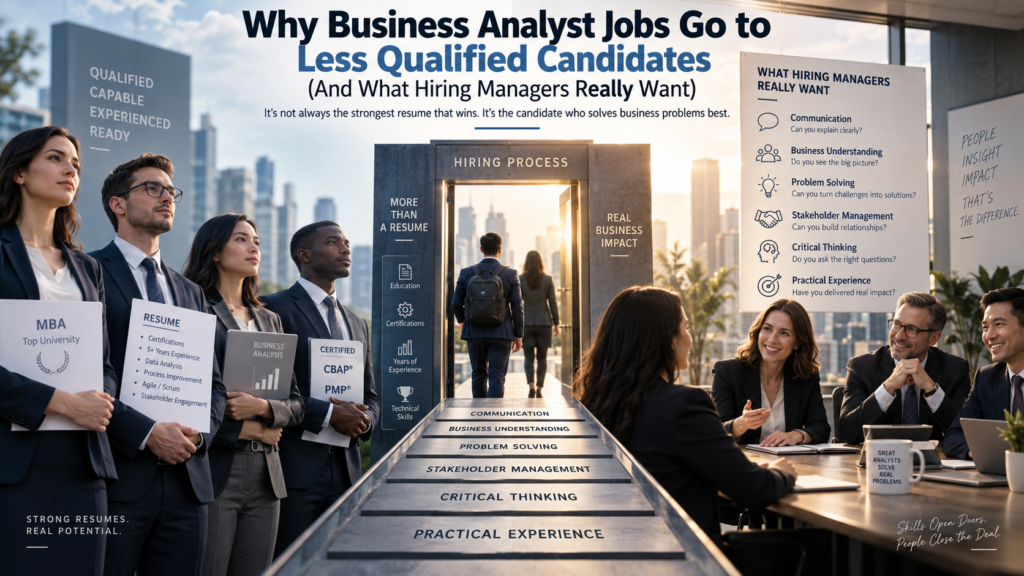

A candidate with a business degree, a recognised certification, and years of analytical experience gets passed over. The role goes to someone with a shorter resume and a less impressive certificate. If this sounds familiar, you’ve run into one of the most frustrating patterns in Business Analyst jobs: qualifications on paper don’t always win the room. What wins the room is something else entirely and most candidates never find out what it was until it’s too late.
This isn’t a flaw in the hiring process, even though it feels that way from the outside. Hiring managers for Business Analyst roles are screening for a specific set of practical, stakeholder-facing signals that a degree or certificate alone doesn’t guarantee. Below, we unpack exactly what those signals are, why technically stronger candidates keep losing out to less qualified ones, and the concrete steps to become the candidate who actually gets the offer.
Why Qualifications Alone Don’t Win Business Analyst Jobs
A Business Analyst sits at the intersection of business needs and technical solutions. The role is defined less by any single hard skill and more by the ability to translate turning a vague business problem into a clear requirement, and a technical constraint into language a stakeholder can act on. That translation skill is difficult to certify and almost impossible to prove through a transcript alone.
Hiring managers know this. So while a certification or degree gets a candidate shortlisted, the interview itself is designed to test something a piece of paper can’t: how a candidate actually thinks through ambiguity, handles a disagreement between stakeholders, and communicates a recommendation under pressure. Candidates who over-index on credentials and under-prepare for this part consistently lose out.
Why Less Qualified Candidates Keep Getting Business Analyst Jobs
None of the reasons below suggest the less qualified candidate was actually less capable. They usually just demonstrated the right things more clearly.
1. They tell a clear story with examples, not credentials
A candidate who can walk through a specific example the stakeholder conflict they resolved, the requirement they clarified, the process they mapped is more persuasive than one who lists certifications and hopes the interviewer infers competence from them.
2. They demonstrate stakeholder management, not just documentation skill
Writing a clean set of requirements is only part of the job. Hiring managers are listening for evidence a candidate can manage a difficult stakeholder relationship, because that’s where most real Business Analyst work actually breaks down.
3. They speak the language of business outcomes
A candidate who explains their work in terms of cost saved, risk reduced, or process time cut speaks directly to what a hiring manager cares about. A candidate who only describes the documentation methodology used sounds technically correct but commercially disconnected.
4. They show genuine familiarity with the tools the team actually uses
Certifications often teach a generalised methodology. Candidates who can speak specifically to the tools and frameworks a particular team already uses whether that’s a specific requirements platform, agile ceremony, or process modelling notation — read as immediately productive, not just theoretically qualified.
5. They ask sharper questions during the interview
The questions a candidate asks reveal how they think. A less credentialed candidate who asks about current pain points, stakeholder dynamics, or how success will be measured often out-competes a more qualified candidate who only asks about salary and start date.
6. They’ve built a portfolio of real analysis work
A documented case study, a sample requirements pack, or a process improvement write-up gives a hiring manager something concrete to evaluate. Candidates relying purely on certification names are asking the interviewer to take their competence on faith.
What Hiring Managers Really Want
Strip away the job description boilerplate, and Business Analyst hiring managers consistently screen for the same underlying pattern:
- Clear, structured storytelling using specific past examples, not abstract claims.
- Demonstrated stakeholder management and conflict-navigation skill.
- Fluency in translating technical detail into business outcomes and vice versa.
- Familiarity with the specific tools, frameworks, and ceremonies the team already uses.
- A visible portfolio or work sample, not just a certification name on a resume.
Every one of these is learnable and demonstrable and it’s exactly what a well-structured business analyst course, paired with deliberate practice, is designed to build.
How to Become the Candidate Who Actually Gets the Business Analyst Job

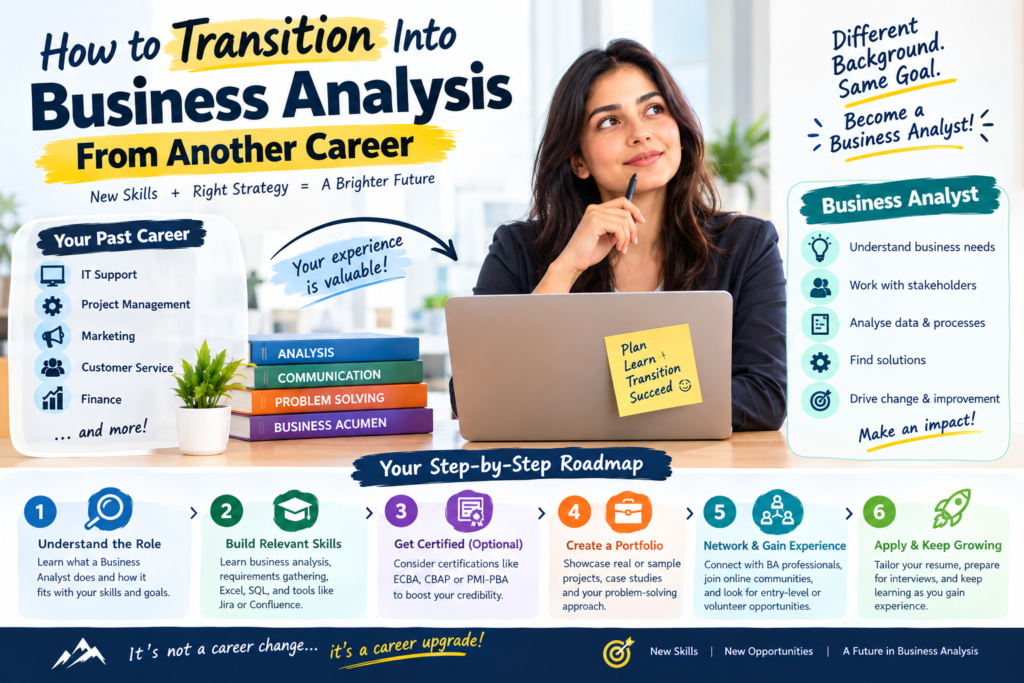
Winning the role isn’t about collecting another certification. It’s a deliberate sequence of building demonstrable, interview-ready evidence most candidates skip.
Step 1: Choose a course that builds practical skill, not just exam knowledge
Start with a Business Analyst course that goes beyond exam preparation into real requirements-gathering, process mapping, and stakeholder management practice the skills that actually get tested in interviews and on the job. Aligning your study with a recognised body of knowledge, such as the International Institute of Business Analysis (IIBA), also ensures your certification carries weight with employers.
Step 2: Build a portfolio of real analysis work
Document a requirements pack, a process map, or a case study — even from a self-directed or academic project with a clear before-and-after outcome. This single asset does more for an interview than any certificate name.
Step 3: Practise telling your story in business outcomes
Rework every past example into a structure that leads with impact: the problem, what you did, and what changed as a result quantified wherever possible. This is the single biggest lever for interview performance.
Step 4: Prepare for stakeholder-conflict scenarios specifically
Rehearse answering questions about a time stakeholders disagreed, a requirement changed late, or a project’s scope had to be renegotiated. These scenario questions are where hiring decisions are actually made.
Step 5: Research the team’s specific tools and frameworks before the interview
Find out, where possible, what requirements platform, agile methodology, or documentation standard the hiring team already uses, and speak directly to your familiarity or fast learning curve with it.
Step 6: Ask questions that demonstrate business thinking
Prepare two or three specific questions about current pain points, how success in the role will be measured, or stakeholder dynamics. This signals commercial thinking well beyond what a certification can demonstrate on its own.
Business Analyst Course Demand and Career Growth Across Australia
Demand for Business Analysts who can demonstrate practical, stakeholder-facing skill not just a Business Analyst course certificate remains strong across Australia’s major business hubs. Business Analyst roles in Sydney, Melbourne, Brisbane, Perth, Adelaide, Canberra, and the Gold Coast increasingly ask for evidence of stakeholder management and requirements work in the interview process itself, not just a listed qualification on the resume.
Salary and offer-rate patterns follow the same trend. Candidates who pair a recognised certification with a demonstrable portfolio and rehearsed, outcome-focused interview answers consistently receive more offers than equally certified candidates who rely on the credential alone regardless of which Australian city they’re applying in.
Choosing the Right Business Analyst Course
Since the interview tests practical, demonstrable skill more than credential recognition alone, course choice matters. Look for a course that offers:
- A curriculum built around real requirements-gathering, process mapping, and stakeholder management, not just exam content.
- Trainers with genuine, current Business Analyst delivery experience.
- Practical exercises and case studies that can become portfolio material.
- Interview preparation guidance specific to Business Analyst scenario questions.
The Business Analyst course at Business Analyst Course is built around exactly this: practical skill development, stakeholder management practice, and a curriculum designed by industry experts, so candidates walk into interviews with evidence, not just a certificate.
Frequently Asked Questions
Why do less qualified candidates sometimes get Business Analyst jobs over more qualified ones?
Hiring managers for Business Analyst roles screen heavily for demonstrated stakeholder management, clear storytelling, and business-outcome thinking skills a resume or certification alone doesn’t prove, and which less credentialed candidates sometimes demonstrate more clearly in interviews.
Is a Business Analyst certification still worth getting?
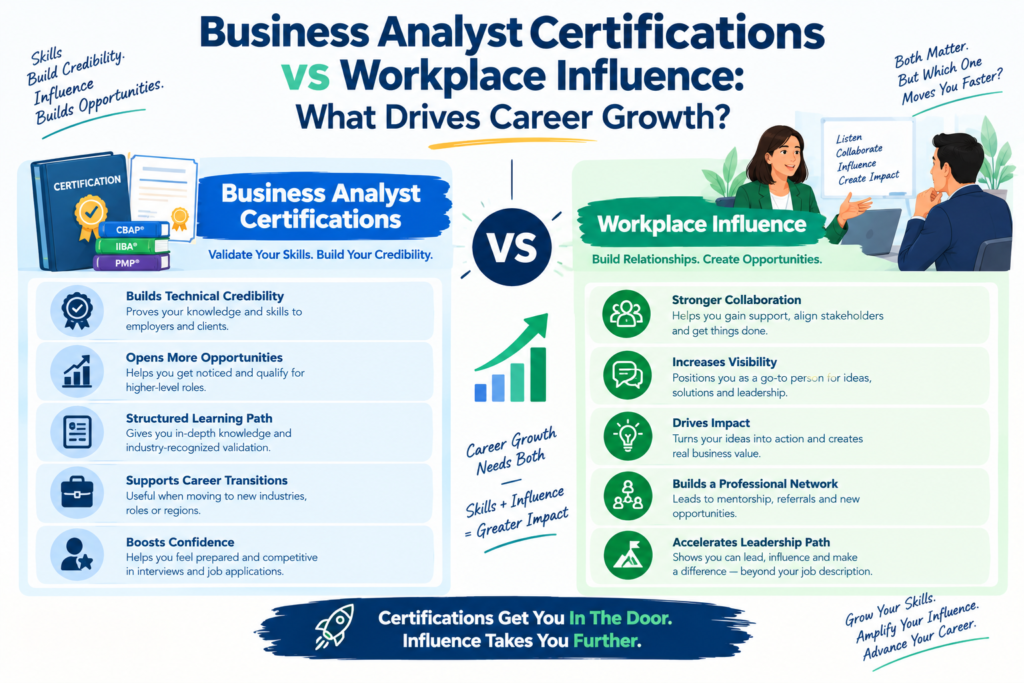
Yes — certification remains an important filter that gets candidates shortlisted and signals foundational knowledge. It works best when paired with a demonstrable portfolio and interview preparation focused on stakeholder and outcome-based scenarios.
What’s the fastest way to improve my chances of getting a Business Analyst job?
Building a portfolio of real analysis work and rehearsing outcome-focused answers to stakeholder-conflict interview questions typically improves offer rates faster than adding another certification alone.
How long does it take to become job-ready for a Business Analyst role?
Most candidates who complete a practical, hands-on Business Analyst course and build a portfolio alongside interview preparation become genuinely competitive for entry to mid-level roles within three to six months of focused effort.
Final Thoughts
Winning Business Analyst jobs isn’t only about who holds the strongest certification. It’s about who can prove, clearly and specifically, that they can translate business needs into outcomes and manage the people in between. The candidates who consistently get hired aren’t necessarily the most qualified on paper they’re the ones who made their practical skill visible and impossible to ignore.
If you’re ready to build that evidence the right way, explore the Business Analyst course and take the first step toward becoming the candidate hiring managers actually choose.